
The £400 Fine That Never Existed
Received a text about an urgent traffic fine? It could be a scam. Learn how to spot fake DGT messages and what to do if you've already clicked the link.
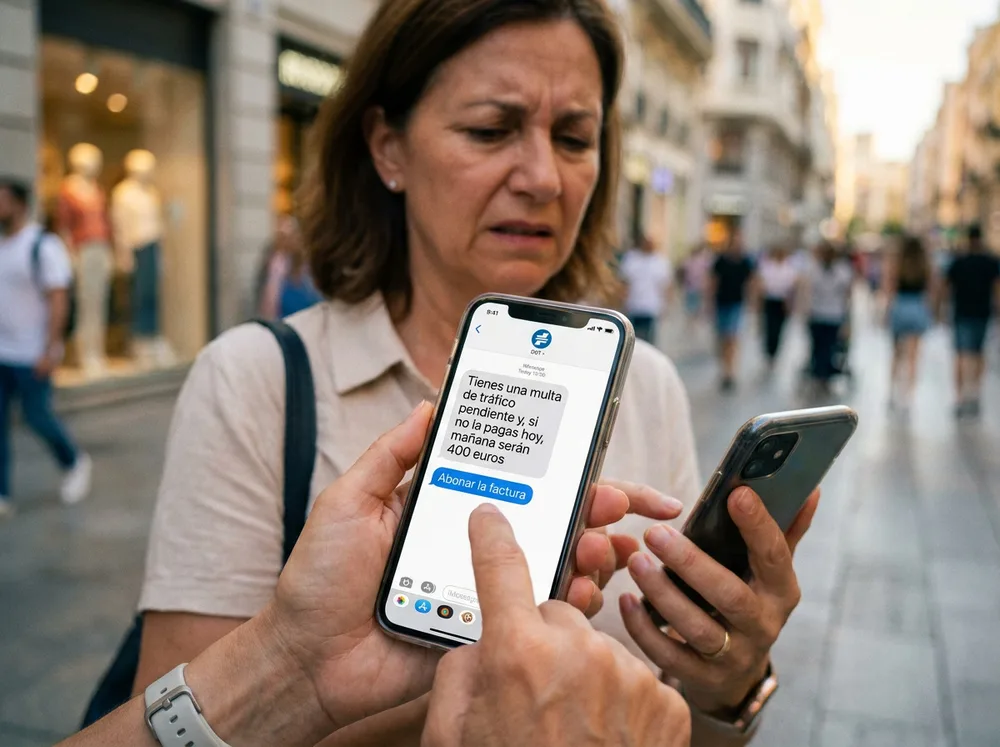
Have you received a text message warning you about a traffic fine that expires today — here on the Costa del Sol or anywhere else in Spain? Before you tap anything, take a breath. That fine may not exist at all.
The Text Message Designed to Panic You
The message always follows the same pattern: "You have an outstanding traffic penalty. If you don't pay today, it will rise to €400." Below it, a link to "settle it in just one minute".
Your heart races and your finger moves instinctively towards the screen. That is precisely what they're counting on.
INCIBE — Spain's National Cybersecurity Institute — has issued warnings about a wave of text messages and emails impersonating the DGT (Spain's Directorate General of Traffic). The link leads to a fake website, copied from the official one down to the last pixel, with the sole aim of stealing your personal and banking details.
Why Does It Work So Well?
Urgency is their most powerful weapon. With such a short deadline, nobody stops to verify anything. If you also happen to own a car or motorbike, or you cover a lot of miles, the message seems entirely plausible.
This is known as phishing — identity fraud carried out via a fake link — and it is one of the fastest-growing digital scams in Spain. The deception lies in a detail that almost nobody checks: the URL.
How to Spot a Fake in Two Seconds
The DGT issues fines by recorded post or through the Dirección Electrónica Vial (DEV), which is the official electronic notification system for drivers. It will never ask you to pay via a text message.
If you receive one of these messages, delete it without tapping anything. If you're concerned about whether you have any genuine outstanding fines, go directly to the official DGT website by typing the address yourself — never by following a link in a message.
What If You've Already Clicked the Link?
If you've entered your details or provided any banking information, act quickly:
1. Call your bank immediately and explain what has happened.
2. Change the passwords for all your online accounts.
3. Report the fraud to the Policía Nacional or the Guardia Civil.
Time is critical in these situations. The sooner you alert your bank, the greater the chance of stopping an unauthorised transaction.
Keep Your Car Well Covered — and Your Data Too
Protecting your vehicle matters, but protecting your personal data matters just as much. If you hold a car insurance policy and receive communications claiming to come from the DGT, your insurer, or any official body, always pause before you click.
The Golden Rule: If It Rushes You, Distrust It
Digital scams thrive on urgency and fear. If a message tells you that you have hours to act, that is the first sign that something doesn't add up. No official body will ever put that kind of pressure on you.
Stop, verify things for yourself, and if in doubt, ask someone you trust before tapping anything.
Questions about your insurance? Message us and we'll review it with you.
We're independent insurance brokers in Marbella. We compare the best options for you at no cost.