
"Accept All": the most expensive click you make every day
Every click on "Accept All" reveals more than you think. We explain what tracking cookies are and how to protect your privacy in Marbella.
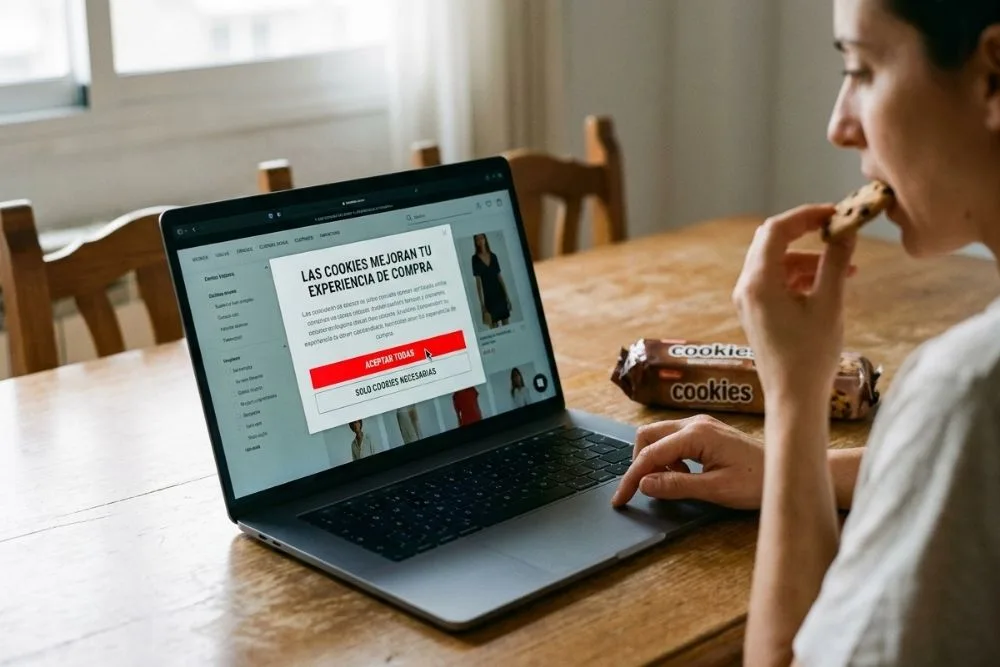
How many times have you clicked "Accept All" today? You probably can't even remember. We do it automatically, like signing a contract without reading it. And on the Costa del Sol, where many businesses and individuals do almost everything online, that habit can have greater consequences than it might seem.
What you're actually agreeing to
When you click "Accept All" on that cookie notice, you're not simply dismissing an annoyance. You're giving permission for websites to record your location, your browsing history, your devices, your shopping preferences and much more.
All of that information is analysed and, in many cases, sold to third parties to build highly detailed advertising profiles about you. No, this isn't science fiction. It's the business model behind a large part of the internet.
Not all cookies are the same
Here's the important part: not all cookies do the same thing.
Technical cookies are necessary for a website to function. Without them, you wouldn't be able to log in or add items to your basket. These are fairly straightforward.
Tracking or analytical cookies are a different matter entirely. They monitor what you do on one website and cross-reference it with what you do on others. Over time, they know more about your habits than you do yourself.
Why this goes beyond advertising
The real problem isn't that adverts for trainers appear after you've searched for them. The problem is that this accumulation of data can be used in ways you wouldn't imagine: from manipulation campaigns to digital fraud where knowing your weak spot is your best protection.
The more that is known about you, the easier it is to deceive you with a personalised message, a fake offer or an identity fraud. Cybercriminals read those profiles too.
What you can do right now
You don't need to be a technology expert. These steps are straightforward and make a real difference:
1. Don't click "Accept All" out of habit. Take two seconds. Most websites have a "Reject" or "Manage Settings" button.
2. Use the "Reject All" option whenever you can. In Spain, the law requires that option to exist and to be just as accessible as "Accept All".
3. Clear your cookies regularly. Go to your browser settings, then privacy. It's quick and removes the trail you've accumulated.
4. Review the permissions on your mobile apps. Many access your camera, microphone or location without genuinely needing to.
If you run a business, this affects you twice as much
If you manage a business in Marbella or anywhere on the Costa del Sol, digital privacy is not merely a personal matter. It is a legal responsibility and a genuine risk to your company.
A client data breach, an attack carried out using information gathered online, or a vulnerability in your systems can cost you dearly — both financially and in terms of reputation. This is why it makes sense to consider a cyber risk insurance policy, which covers precisely that type of claim — an incident that results in financial or legal loss — when the unexpected happens.
Your privacy isn't free
The internet has led us to believe that everything is free. But the price does exist: we pay with our data. And that data, poorly managed or in the wrong hands, can become a serious problem.
The next time that notice appears, you'll know what lies behind it. It's your choice whether to sign or not.
Is your business protected against a cyberattack? Message us and we'll review it with you.
We're independent insurance brokers in Marbella. We compare the best options for you at no cost.